

Storage and Transport of Hydraulic Equipment: The Number One Cause of Damage
The storage of hydraulic components and hoses is an important consideration for the safety and reliability of your equipment. Incorrect storage of these components can lead to damage and a shorter service life. In this article, you’ll learn what to consider when storing hydraulic components and hoses.
Incorrect storage is the leading cause of damage to hydraulic components. Hydraulic oil is often part of the problem, as it can contaminate and damage other tools and equipment. When a coupling is disconnected incorrectly, some oil will inevitably be released. In addition, equipment is often thrown into one large steel container. And the emphasis here is on thrown – with all the associated risks.
Internal Hose Damage
Cylinders often weigh between 15 and 20 kg, which means they can easily damage other components if dropped on top of them. If a cylinder falls onto a hose, for example, it can cause the hose to kink and damage its inner lining.
It is therefore better to leave the hose connected to the pump and coil it up like a garden hose. Make sure not to coil it too tightly. The hose must never be kinked, as this can also damage the inner lining.
Store Components Separately
The best approach is to store all components separately. Many companies already do this very well: the hose is stored separately from the pump, and the pump separately from the cylinders. Hoses can, for example, be hung on hooks. Make sure they do not touch the floor to prevent damage.
Use a Drip Tray
It is perfectly understandable that some companies use a drip tray. However, it is important to place all components in it carefully and to use the drip tray only for pumps and hoses.
Cylinders are best stored in a separate cabinet, possibly with a drip tray underneath to collect any leaking oil.
Storing Cylinders
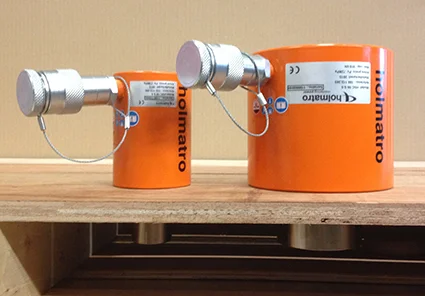
Cylinders are used to lift and move heavy objects, so storing them correctly is essential for maintaining their quality and safety. Common causes of cylinder damage include a misaligned plunger, side loading, damaged seals and excessive contamination by sand. Couplings are also frequently damaged due to careless handling.
It is therefore important to store and transport cylinders correctly. Hydraulic equipment specialist Holmatro, for example, recommends storing cylinders upside down to help prevent air from entering the system.
Transporting Hydraulic Equipment
I have noticed that transporting hydraulic equipment can still cause problems. The components attached to a cylinder are often very vulnerable. That is why it is important never to carry a cylinder by these components. Yet I still see this happening regularly.
If you transport cylinders in your vehicle, make sure they do not have too much room to move. This prevents them from rolling around and colliding with each other during transport.
Check the Expiry Date
Hydraulic hoses have a limited service life. Holmatro, for example, specifies that hydraulic hoses should be replaced every ten years, while other manufacturers specify a seven-year replacement interval. Once hoses have exceeded their recommended service life, they can become more susceptible to damage and potentially create hazardous situations.
Minimise Damage and Risks
Would you like more information about the correct storage and transportation of hydraulic tools? Or would you like to know how to work with them as safely as possible? Contact your nearest Mennens branch.


